Now booking: collection runs from Cayce to Lake Carolina — start an estimate
Serving the Midlands
Rug Cleaning

Professional Rug Cleaning in Columbia

Every rug is washed by hand, off site — not cleaned in place with a wand over your heart pine floor, and never run through a machine that treats silk like a doormat.

The Difference

Why Rug Cleaning Is Not Carpet Cleaning

Fitted carpet is stretched over tack strip with a pad beneath it and a sealed backing on top of that. It drains downward, it is anchored on all four sides, and it will put up with a fairly rough approach. An area rug shares none of those properties: both faces are open, it lies loose on your floor, and in many cases the only thing holding it together is a hundred years of hand-tied knots on a cotton warp.

When someone cleans a rug in place with a hot-water wand, three things happen. Soil at the base of the pile gets pushed deeper rather than lifted out. Water goes into the foundation with nowhere to go, and in a city where the average July day tops ninety degrees and the rain arrives in the hottest months, that becomes a musty rug rather than a clean one. And the floor underneath — in most Columbia houses a finished wood floor over a vented crawlspace — is already handing moisture up from below, so the water has nowhere to go but back into the rug.

Off-site washing exists to avoid all of that. The rug leaves the house, gets its dry sand, clay and pollen removed before any water is introduced, is washed and rinsed until the water runs clear, and is dried flat in moving air. Then it comes back.

Learn how rugs are constructed

A wool rug hanging on the rack with rinse water running clear off the pile
Wool rug being rinsed, clean water sheeting off the pile.
Step by Step

The Cleaning Process

Six stages, always in this sequence. Most of the ruined rugs we see were ruined by somebody skipping one of them.

Inspection & Dye Testing

The rug goes down flat and gets read from both sides: fibre, construction, existing damage, past repairs, and a swab on every colour to see which dyes are stable. What comes out of that decides the method, and anything we find gets passed on to you rather than filed away.

Dry Grit & Pollen Removal

Before water, the dry material comes out. A Midlands rug holds Sandhills sand, red clay dust and a spring of pine and oak pollen down at the foundation. Compressed-air dusting and controlled beating shake it loose — the single most important step for how long a rug lasts.

Pre-Treatment

Spots, pet accidents, mildew blooms, clay staining and traffic lanes are treated individually with chemistry matched to the fibre, then given dwell time. Wool and silk get a neutral pH; synthetics can take something stronger.

Full Immersion Wash

The rug is submerged and washed by hand with soft brushes worked in the direction of the pile, so suspended soil floats free instead of being ground in. Immersion is also what carries urine salts and iron staining out of the foundation, which no surface method does. Delicate and unstable-dye rugs get a low-moisture method instead.

Rinse & Controlled Drying

Rinsing carries on past the point it looks finished, because detergent left in a pile attracts soil faster than the rug ever did on its own. The water is then wrung out mechanically and the rug lies flat in filtered moving air. Never in the sun, which takes colour out of the top and leaves the wool harsh.

Grooming & Final Check

The pile is combed back the way it grows, the fringe is worked out straight, and the rug is read against the intake notes line by line. Whatever did not come out is pointed out to you before it goes back on the van, not after.

Recent work

Before and After

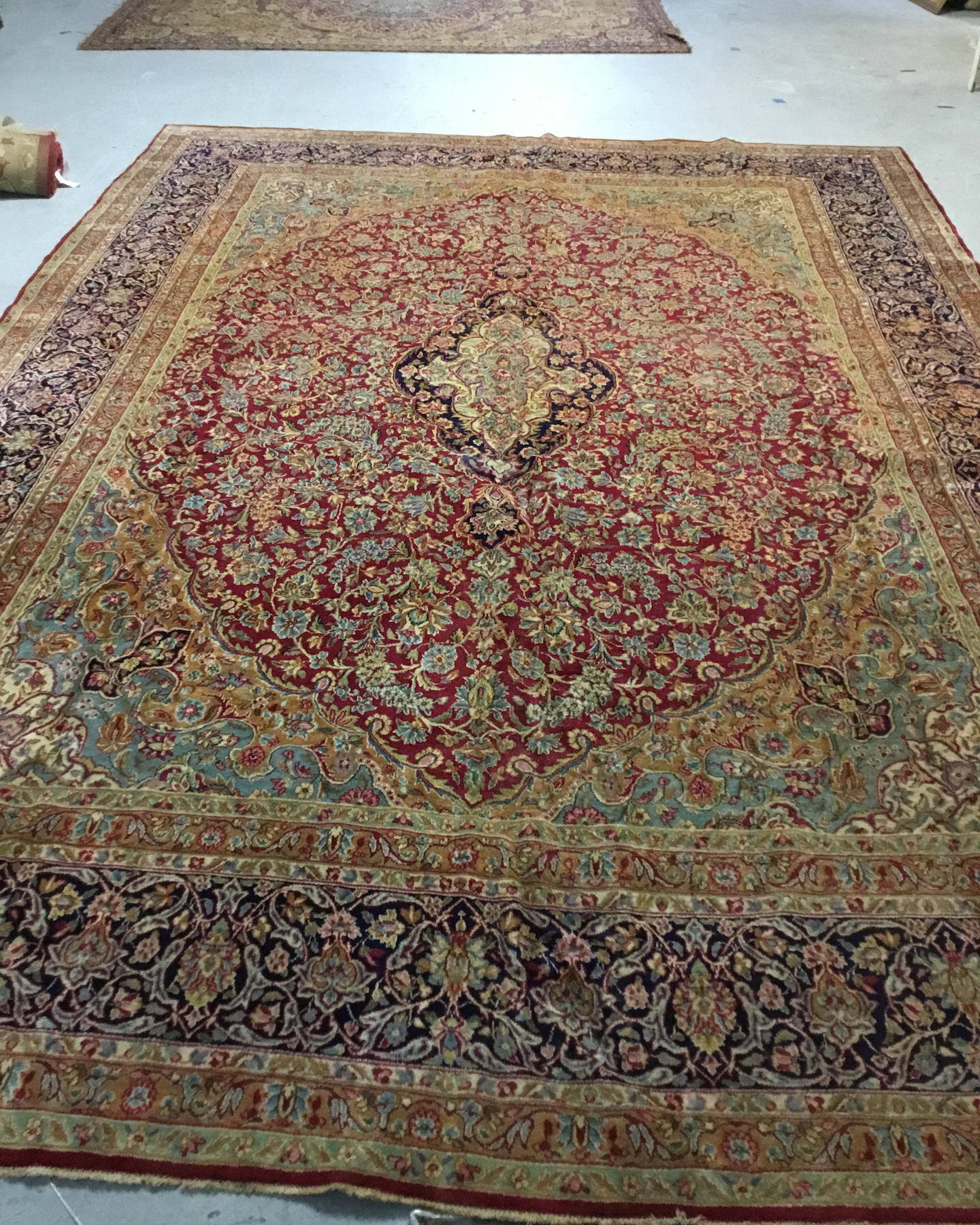
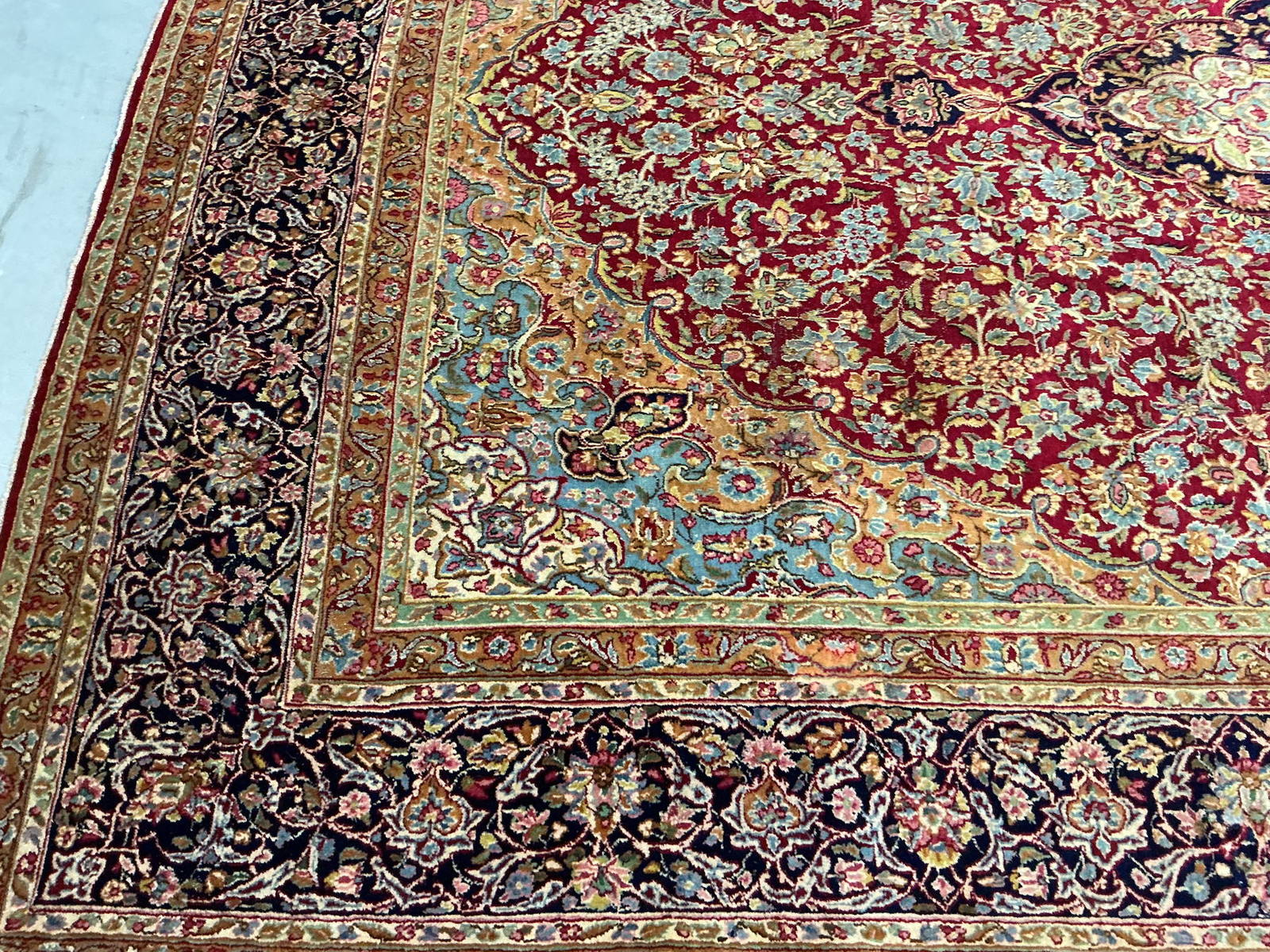
One hand-knotted Persian rug, photographed before and after cleaning.

Before
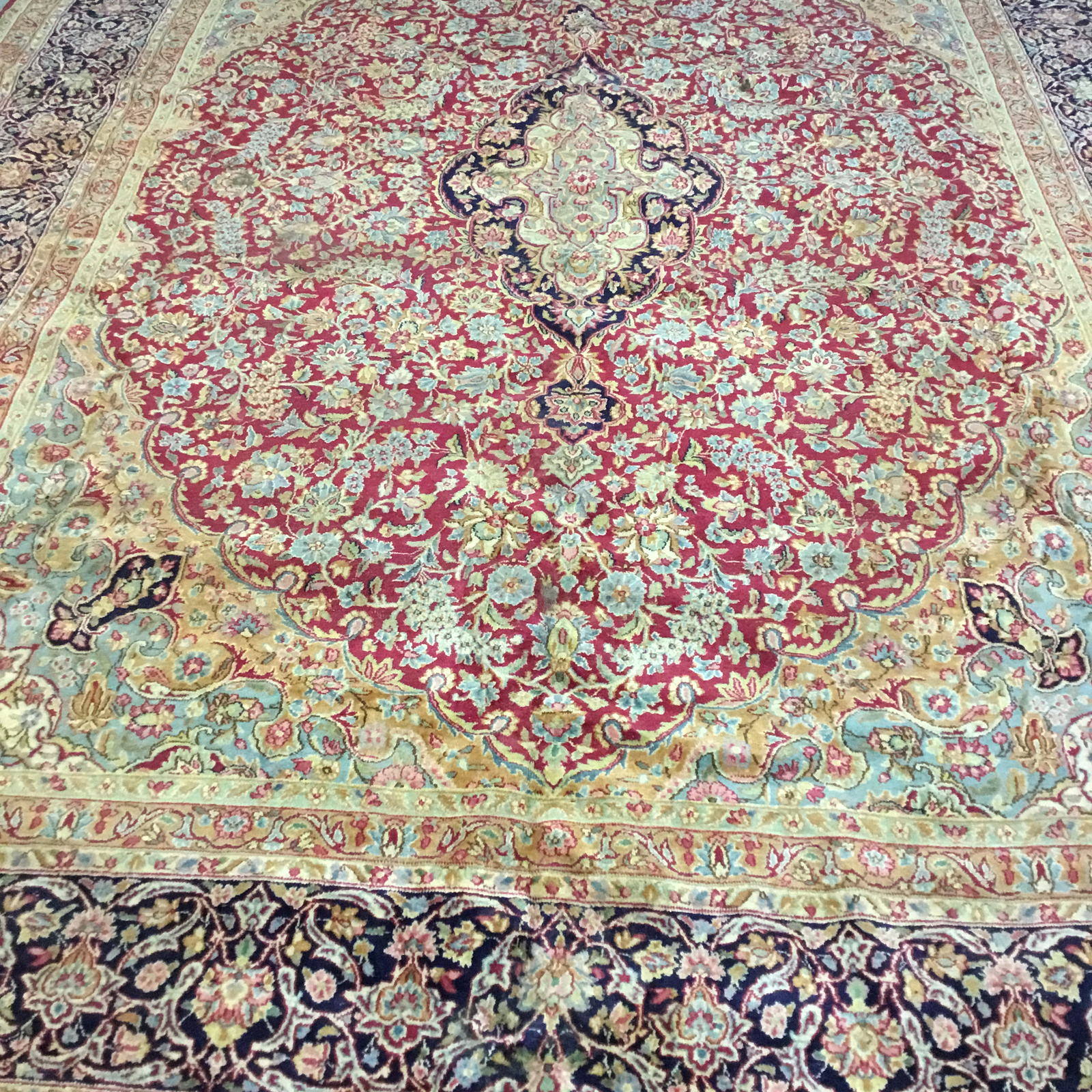
Hand-knotted Persian rug before cleaning, the deep red field and blue-green floral tracery muted and greyed
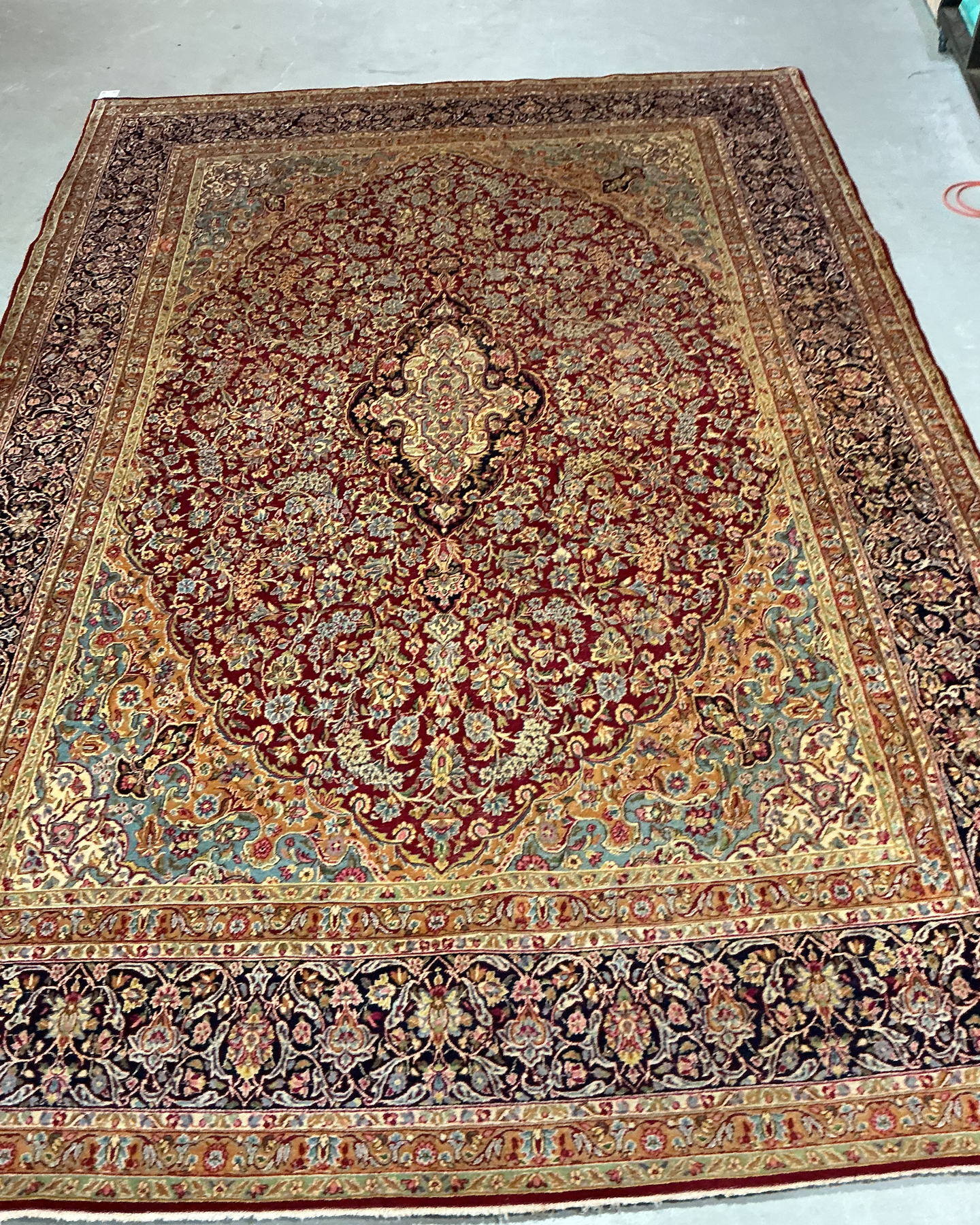
After
The same rug after cleaning, with the red field, gold corner spandrels and blue-green florals showing clearly
A hand-knotted Persian, before and after cleaning.
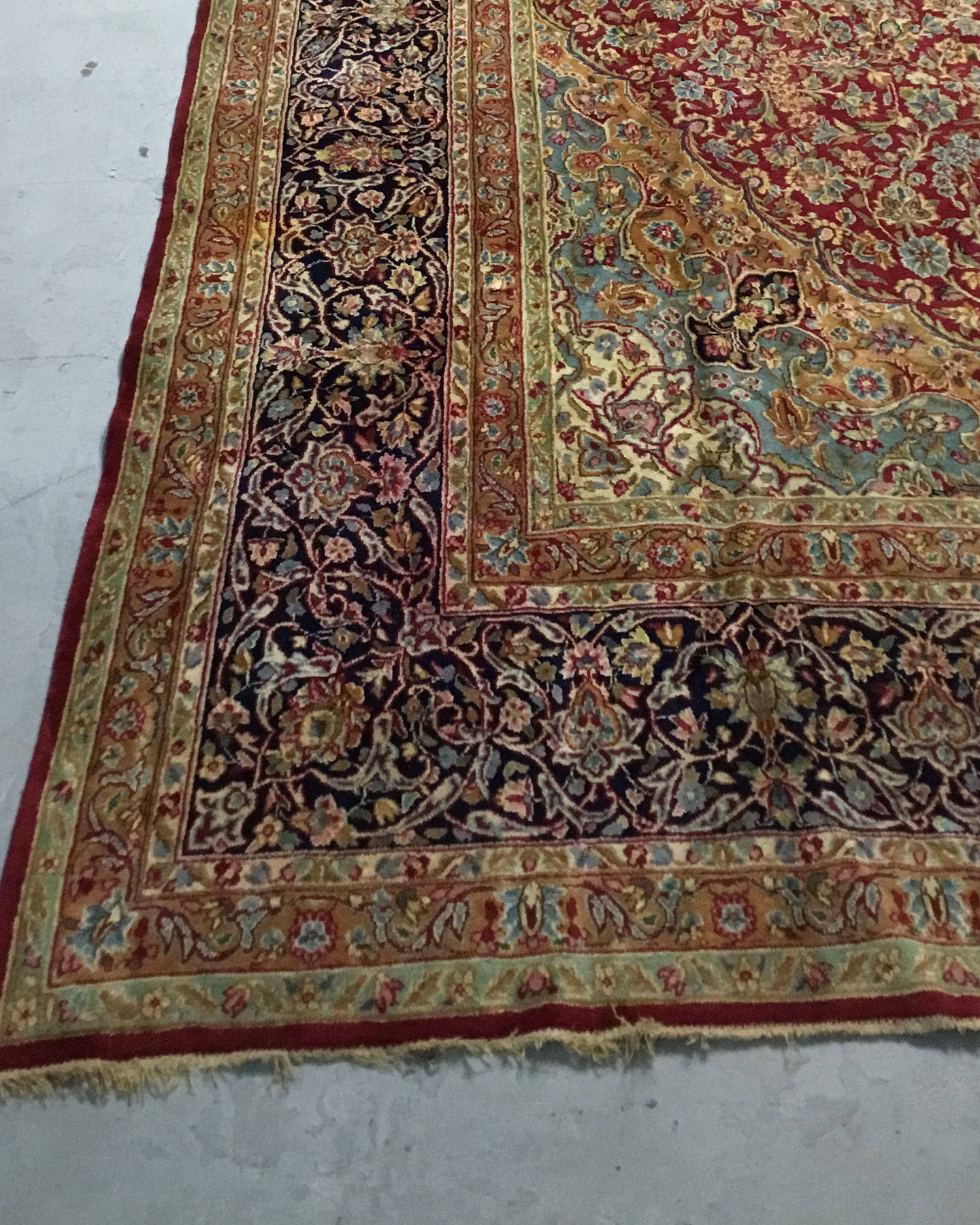
Before
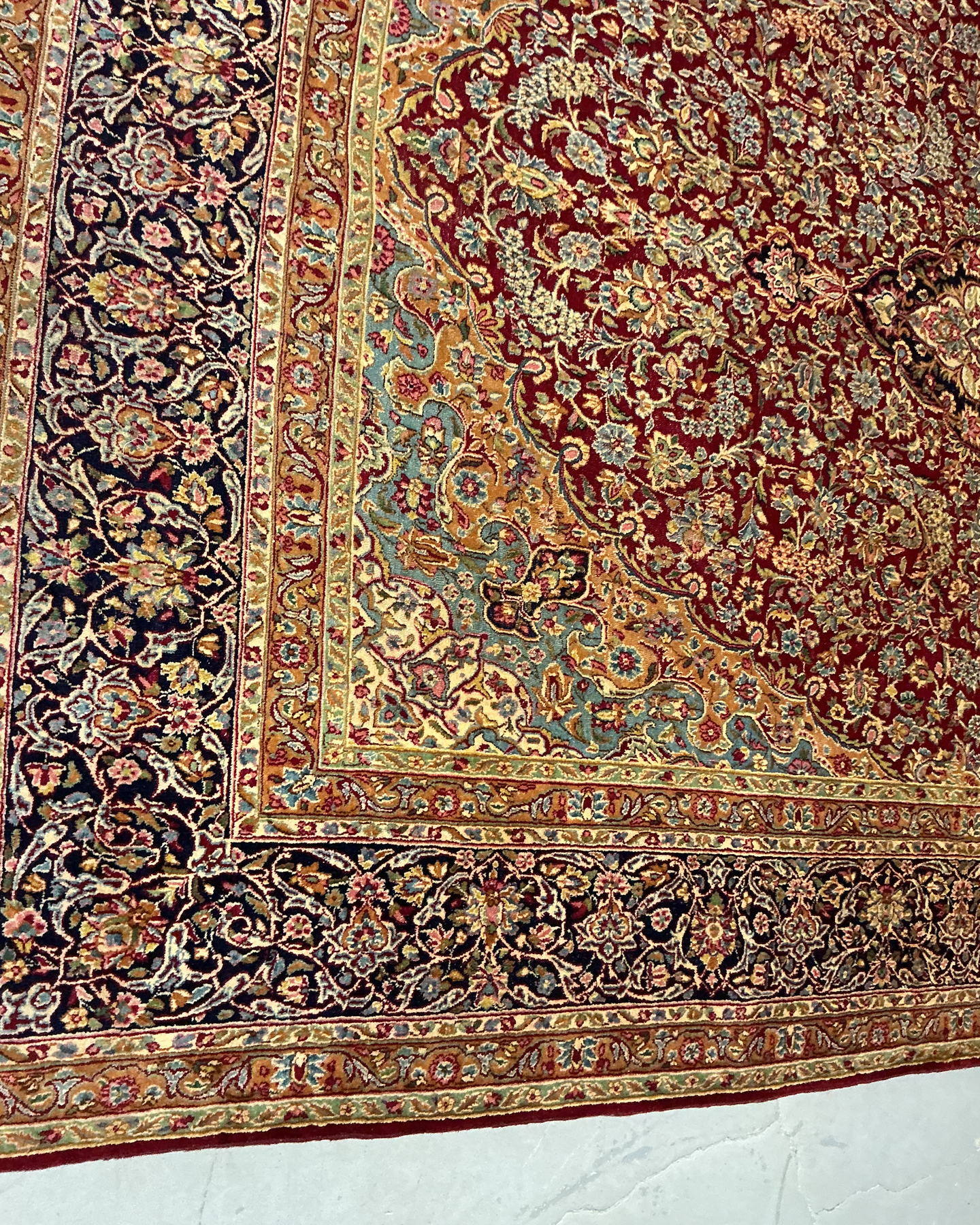
Corner of the same rug before cleaning, the navy border and ivory fringe dulled and flattened in tone
After
The same corner after cleaning, with the navy border, gold guard bands and ivory fringe distinct again
Corner detail — border, guard stripes and fringe.
Before
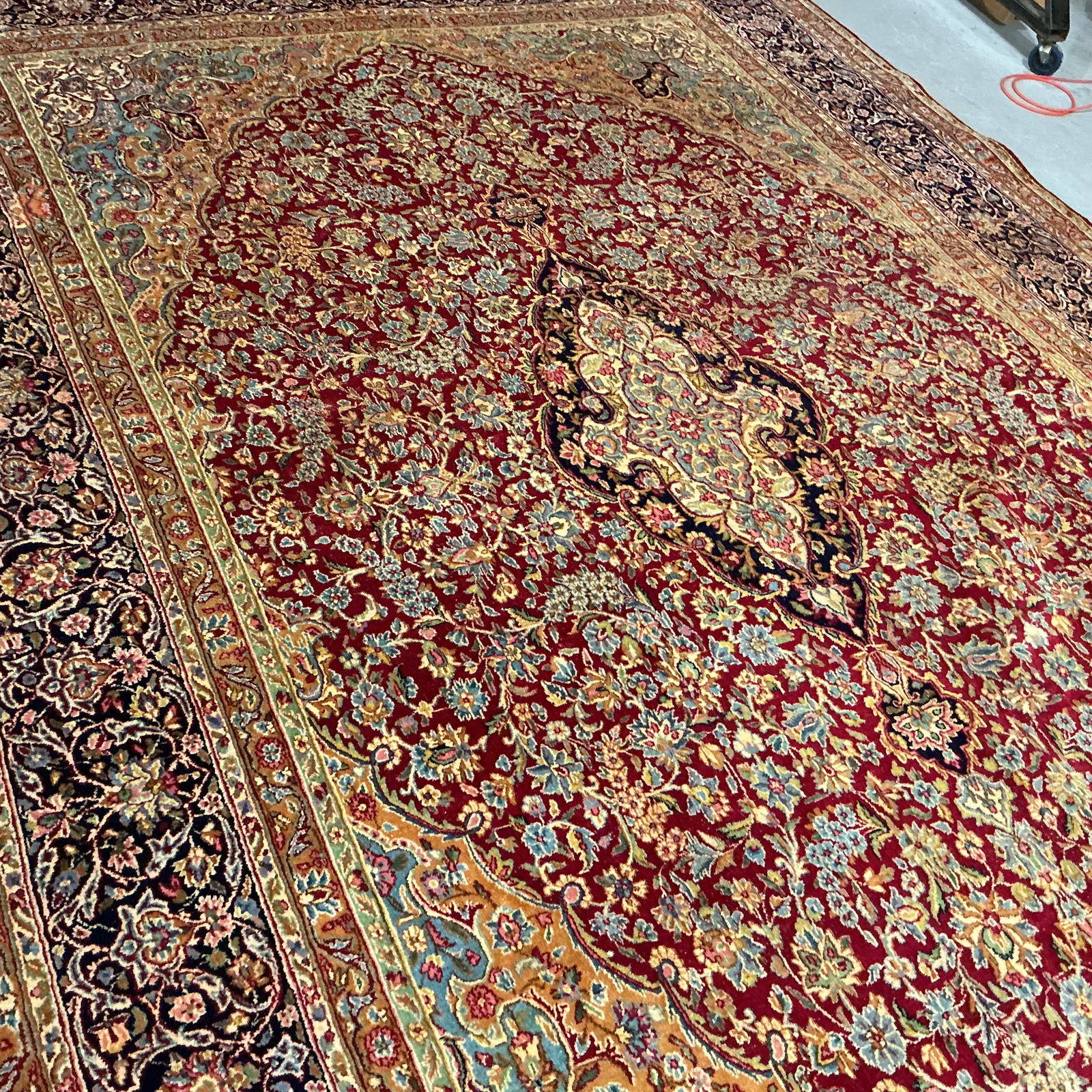
Centre of the same rug before cleaning, the navy medallion and red field hazy and low in contrast
After
The same medallion after cleaning, the cream and gold palmette reading crisply against the navy and red
The central medallion and the field around it.
Before
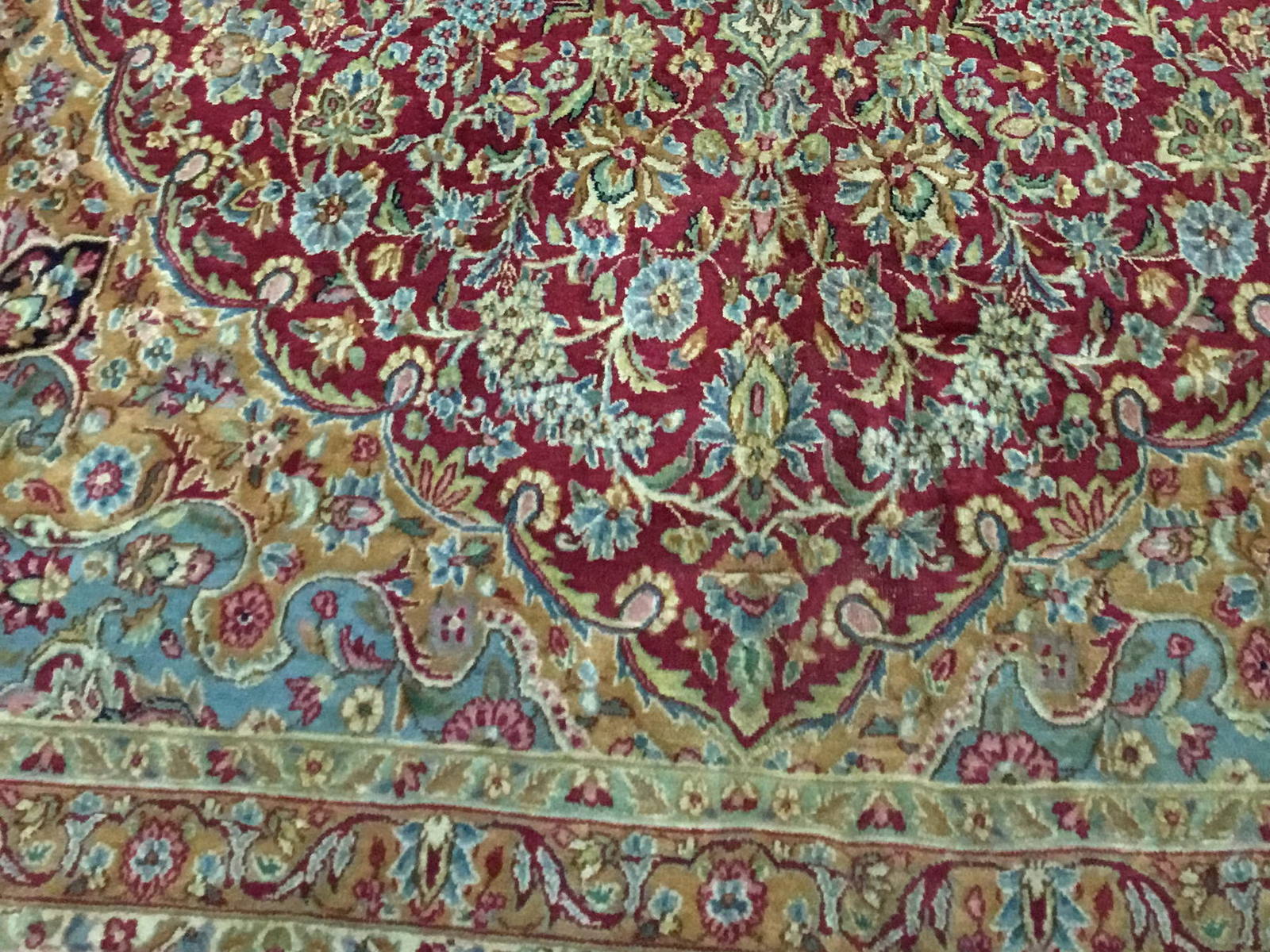
Field meeting border on the same rug before cleaning, the blues and pinks greyed and indistinct
After
The same section after cleaning, with the pale blue scrollwork and pink florals separated and legible
Where the field meets the border.
What We Accept

Rug Types We Clean

Anything that lies on a floor has a right way to be washed. The list below is how the common ones get handled.

Fibre and construction types, with the handling each one needs.
Rug type How we handle it
Hand-knotted Persian & oriental Dye-tested, then washed through in the tank. Fringe worked by hand. Anything old enough to be fragile gets a gentler brush and a longer dry.
Wool area rugs Immersion at neutral pH. The point is to leave the lanolin in the fibre — strip it and the rug soils faster ever after.
Silk & art silk (viscose) Low-moisture work only. Viscose goes yellow and board-stiff if it is over-wet, so nothing in this row ever sees the tank.
Cotton flatweaves & dhurries Moisture kept under close control and the rug dried on tension, so a reversible weave comes back flat instead of puckered or short.
Jute, sisal & seagrass Dry methods, or as close to dry as the soiling allows. Plant fibre marks itself with its own water, and it is the first thing in a Midlands house to go mouldy.
Hand-tufted rugs Cleaned around the glue rather than through it. That latex layer is the weak point in the whole construction and the source of the sour smell when it goes.
Machine-made synthetics Polypropylene, nylon and polyester will take a full wash and a firmer pre-treatment than wool ever would. Pound for pound the best results we get.
Shag, hides & sheepskin Handled apart from everything else, with agents chosen for the fibre and a hand finish afterwards to put the loft back into it.
Local Specialties

Problems Columbia Rugs Actually Have

Summer Heat, Crawlspaces & the Shut Room

The average July day here reaches the low nineties and the rain peaks in the same months. Under most older houses is a vented crawlspace, so warm outdoor air is drawn beneath a floor that is cooler than it is and leaves its moisture there, coming up through the boards into whatever is lying on them. Add a formal room with its door shut and its register closed for the cooling season and the rug in it never gets a dry week. What you notice in August is a smell, and that smell is microbial growth down in the foundation — it comes out in the wash and is followed with an antimicrobial. Deodoriser sprayed on top lasts until the next humid afternoon.

Pine Pollen, Sandhills Sand & Red Clay

Three different problems that arrive on the same pair of shoes. Spring pollen is organic matter and it settles at the base of the pile, where it feeds what the humidity has already started. Sandhills sand is hard and fine, it works down to the knots and cuts the fibre from below every time somebody crosses the room — which is why a rug thins out while still looking clean from above. Red clay is iron-rich, so it stains rather than soils, and scrubbing it wet spreads a rust-coloured halo. All three have to come out dry, before water, and the clay needs chemistry chosen for iron rather than for dirt.

Pet Urine & Stains

Urine salts stay in the foundation and pull moisture back out of the air every time the dew point climbs, which here is most of the summer — which is exactly why an old accident announces itself again in July. They also burn dye if they are left. The contamination is flushed out entirely, and discolouration is corrected where the dye underneath survived.

How the Work Is Set Up

Washed Off Site, Flat

Nothing is washed in your house. Rugs leave, get cleaned properly, and dry lying flat in moving air rather than hung dripping or left damp on your boards.

Safe for Every Fibre

Fibre and dye stability are established before anything gets wet. Wool and silk see neutral chemistry only; the stronger stuff is reserved for what can take it.

Collection & Delivery

Richland and Lexington counties, both directions, included. Furniture gets moved off the rug too.

Plain Answers

You hear what the intake found, what the price is, and which marks are staying. Work begins after you have agreed to all three.

Questions

Frequently Asked Questions

How long will my rug be away?
You get a timeline with the quote, before anything starts. Drying is the slow part and it is slower in high summer, because a rug is dried until it is actually dry rather than until the schedule says so. Heavy pet contamination, dye bleeding or repair work extends it, and we tell you that up front rather than afterwards.
Can you collect from a rental or a student house?
Yes, and around Olympia and Five Points it is a routine arrangement. Tell us in the form who is on site and when, and we will work to that. If a rug is coming out of a house in May and going into storage for the summer, get it washed and properly dried first — a dirty rug rolled up in an unconditioned unit through a Columbia August is the single most reliable way to ruin one.
Do you clean every kind of rug?
Hand-knotted Persians and orientals, wool, silk, cotton flatweaves, jute and sisal, tufted rugs, machine-made synthetics, hides and shag all come through. The method changes with the fibre every time, and a handful of them — old silk above all — are only ever cleaned by low-moisture means.
Is collection and delivery really included?
Yes, throughout Richland and Lexington counties. We collect the rug, move the furniture off it, and bring it back rolled and ready to lay down. There is no charge in either direction.
Will washing shrink my rug or make the colours run?
Not if the method fits the rug. Every colour is swabbed before the rug goes anywhere near water; where a dye moves, the wash either drops to low-moisture or picks up a dye-setting stage first. Shrinkage is a drying fault rather than a washing one — it comes from soaking a cotton foundation and then pulling it tight while it dries, which is the opposite of what controlled flat drying does.
How often should a rug be cleaned in this climate?
As general guidance, every twelve to eighteen months for a rug in a main living area. That is shorter than the usual national advice, and the reasons are local: a long hot season with the rainfall peak inside it, vented crawlspaces under most of the older housing, six weeks of pollen in spring, and sand and clay tracked in all year. Guest rooms and low-traffic rugs can stretch to two or three years. Any rug that has been wet should be dealt with immediately rather than eventually.
Can you get the musty smell out of a rug?
Usually, yes. What you are smelling is living in the foundation, not sitting on the pile, so it has to be carried out of the rug in an immersion wash and then followed with an antimicrobial. Anything sprayed on top covers it until the next humid week and no longer. Where the damp has already gone far enough to weaken the warps you have a repair on your hands as well, and we will tell you plainly which of the two you are dealing with.
What does rug cleaning cost?
It is priced per square foot, and the rate moves with fibre, construction and how bad the condition is — a machine-made synthetic and a hand-knotted silk are not remotely the same piece of work. The quote comes before the work, the estimate itself is free, and the figure does not grow between collection and delivery. Send the details through and you will get a number back.
Get In Touch

Book a Collection

A rough description and a street name are enough to get you onto the next run out that way.

  • Service area
    Richland and Lexington counties, South Carolina
    Collection & delivery included throughout
  • Hours
    Mon–Sat: 9:00 AM – 5:00 PM
    Sunday: Closed

Free Cleaning Estimate

Ready for a Cleaner Rug?

The estimate costs nothing, the collection costs nothing, and the rug comes home looking like the one you bought.

Rug Repair & Restoration

Ends, sides, moth grazing and full reweaving — what is repairable, and what the work actually entails.

Repair services

Flood & Water Damage

What to do in the first forty-eight hours after a rug takes creek water, storm runoff or a leak.

Water damage

The Rug Owner’s Guide

Knots, fibres, construction, and how to care for all of it through a Midlands summer.

Read the guide
Start a Free Estimate Service Areas